Showing posts sorted by relevance for query smoked whiskey. Sort by date Show all posts

Monday, December 8, 2014

Winter/Holiday Drinks Week

Winter/Holiday Drinks Week

It's the time of year to be festive, to welcome your friends, coworkers and family, preferably with drink in hand. While it's sadly true that alcohol can't really warm your body (unless perhaps you're drinker a winter warmer), it can warm your spirits, which is often just as useful when it's cold outside.

All this week I'll be sharing recipes for drinks perfect the cold winter months and the holidays. There will be a warm winter drink (today's Spicy Aztec Hot Chocolate with Mezcal), muddled cocktails, a look at the new cocktail book, Death & Co and an assortment of other drinks that just fit this time of year, like the Vanilla Margarita. Expect lots of ginger, spice and whiskey, definitely lots of whiskey (including variations on the Manhattan, Family Therapy and Paper Plane). Please check back everyday, and I promise you'll find something new.

To get you in the mood for this week's new recipes, here are some great winter cocktails I've previously featured:

Spanish Coffee: I ran this drink in the summer, even though it's a warm drink, because it was part of my coverage of Portland bartender Jeffrey Morgenthaler's book, The Bar Book.

Apple Brandy Cocktails: three drinks, including the Norwegian Wood with aquavit, the Widow's Kiss with bitter herbal liqueurs and the warm honey-mustard Scotchem.

The Rye in January: Rye whiskey, ginger-cinnamon flavor of Becherovka liqueur, Cynar, absinthe and grapefruit.

Honey-Nut Old Fashioned: peanut-infused rye whiskey, honey syrup, Angostura bitters.

A Walk in The Woods: A woodsy blend of smoked whiskey, walnut liqueur, homemade rosemary-juniper syrup and grapefruit juice.

A Rye Smile: A bitter-sweet concoction of rye whiskey, Cynar, homemade rosemary-brown sugar syrup and grapefruit.

The Lincoln: Honoring the 14th president (and the Steven Spielberg film) with smoked whiskey, maple and Peychaud's Bitters.

Dallas Drinks: The Julie: bourbon, ginger liqueur, sweet vermouth, bacon-peppercorn bitters.

Dallas Drinks: The Jock: bourbon, Benedictine liqueur, sweet vermouth, smoky Islay Scotch, Angostura bitters.

Related Stories

Spicy Aztec Hot Chocolate with Mezcal

Death & Co: Modern Classic Cocktails (book and recipes)

A Tale of Two Manhattans

Testing the Arctic Chill Muddler (with Peary Christmas and Winter Mojito cocktails)

Family Therapy cocktail

Paper Plane cocktail

Vanilla Margarita

Wednesday, February 20, 2013

Oscar Cocktails 2013: Planning Your Oscar Party

Top (L to R): Amour, Argo, Beasts of the Southern Wild; Middle (L to R): Django Unchained, Les Misérables, Life of Pi; Bottom (L to R): Lincoln, Silver Linings Playbook, Zero Dark Thirty
The Oscars are just three days away! I hope you've enjoyed my series of cocktails inspired by this year's nominees for the Academy Award for Best Picture. It's a collection of drinks as diverse as the movies they are based on.

I came up with these drinks over the course of the last few weeks. Making them all in one night for an Oscar Party could be time-intensive and costly, given the list of ingredients--38 in all across the 9 drinks--and varied techniques for custom syrups and even a little molecular gastronomy behind the "milk foam" in the Beasts of the Southern Wild.

If you're ambitious enough to make all the drinks as is, by all means go for it, but this guide is an attempt to help downsize the work and ingredients a bit while still offering a selection of awesome drinks. The first table lists all the ingredients the drinks call for.

Oscar Cocktails 2013: Table of All Ingredients
Drink Spirit Liqueur/other liquor Syrup Other ingredient Garnish
Amour Gin Pear liqueur, Champagne (Sparkling wine)
Lemon juice Lemon twist
Argo Canadian whisky Sweet vermouth Cardamom Orange juice Orange peel
Beasts of the Southern Wild Rye whiskey Walnut liqueur Roasted corn Milk, milk foam Nutmeg
Django Unchained Bourbon
Peppercorn Mint, club soda Mint sprig
Les Misérables London dry gin St. Germain, ginger liqueur, Lillet Blanc
Lemon twist
Life of Pi Light rum Blue curaçao Simple Lime juice, fine sea salt Orange twist
Lincoln Smoked whiskey
Maple Peychaud's bitters
Silver Linings Playbook Silver tequila Absinthe
Lime juice, Angostura bitters, ginger beer Lime wheel
Zero Dark Thirty Vodka Green Chartreuse, coffee liqueur


Skyfall Scotch Lillet Blanc, ginger liqueur

Lemon twist

The second table lists the equipment, my judgement of each drink's difficulty and ideas for substitutions that consolidate ingredients across the drinks and cut down on the more challenging techniques.

For example, four of the cocktails call for whiskey, but each uses a different type: rye (Beasts of the Southern Wild), Canadian (Argo), bourbon (Django Unchained) and smoked (Lincoln). Although there are reasons for those choices, one good whiskey (bourbon or rye perhaps) could suffice for making all four drinks. And although the custom syrups give the drinks unique character, simple syrup could be used instead. And I won't fault you for using whipped cream instead of the milk foam.

Oscar Cocktails 2013: Table of Difficulty, Equipment and Simplifying substitutions
Drink Difficulty Glass Equipment Simplifying substitutions
Amour Easy (pour, shake and mix) Champagne flute Shaker Substitute a liqueur used in another drink, like St. Germain or ginger liqueur; use a less expensive sparkling wine than Champagne, such as prosecco.
Argo Medium (make syrup, pour and shake) Rocks Shaker, sphere ice mold Substitute simple syrup, use a different whiskey, use regular ice, omit bitters or use the same for the Lincoln.
Beasts of the Southern Wild Hard (make syrup, milk foam requires time and special equipment) Coupe Shaker, baking sheet, saucepan, cream siphon Substitute simple syrup (do not substitute regular corn syrup), use a different whiskey, substitute whipped cream for the milk foam.
Django Unchained Medium (make syrup, muddle, pour and shake) Highball Shaker, saucepan, muddler Substitute simple syrup (perhaps with a couple shakes of hot sauce), use a different whiskey.
Les Misérables Easy (pour and shake) Martini Shaker Substitute dry vermouth for Lillet Blanc, use different liqueurs from other drinks, such as Green Chartreuse or pear liqueur.
Life of Pi Medium (salt rim, pour and shake) Coupe Shaker, small plate Omit the salt rim.
Lincoln Easy (pour and shake) Coupe Shaker Use a different whiskey, use the same bitters as the Argo.
Silver Linings Playbook Easy (pour and shake) Rocks Shaker Substitute a liqueur used in another drink for the absinthe, such as Green Chartreuse or ginger liqueur (will make it really gingery). 
Zero Dark Thirty Hard (requires careful layering of ingredients) Tall shot Spoon Substitute rum (from the Life of Pi) for the vodka. If layering fails it will still taste the same.
Skyfall Easy (pour and shake) Martini Shaker You could substitute whiskey for the scotch, although that really defeats the purpose of the drink.

Have fun, enjoy, drink responsibly and let me know if you make the drinks and what you think of them. Vote for your favorite Oscar Cocktail on Facebook.

Thursday, September 6, 2012

Cocktail: The Backyard


I call this drink The Backyard because it's made up of ingredients that remind me of my backyard as a child, specifically the juniper syrup, because we had a juniper tree; the mint leaves, which grew wild by the garage gate; and the smoked whiskey, since we barbecued out back frequently.

The Backyard

6-8 mint leaves
1 oz. juniper syrup (see recipe below)
1 1/2 oz. smoked whiskey
1 oz. lemon juice (juice from 1/2 fresh lemon)
2 oz. club soda

Add mint leaves and juniper syrup to shaker and muddle. Add ice, whiskey and lemon juice and shake until cold. Strain into lowball glass with ice. Top with club soda.

Juniper Syrup

1 tbsp. juniper berries
3/4 cup sugar
3/4 cup water

Gently crush juniper berries (a muddling tool works well). Add to medium saucepan with sugar and water. Bring to boil over medium-high heat. Reduce heat and simmer 15 minutes. Remove from heat and let mixture sit for about an hour minimum (up to 4 hours). Strain and keep in refrigerator.

Friday, October 30, 2015

October 2015 Digest


Smoke, Spice and Spirits in Austin

Austin, Texas is a pretty hot place. Even in October, the temperatures rise to the mid-90s (seriously). Nonetheless, it's a pretty cool place too. Chris and I enjoyed a wonderful long weekend in Texas' capital city, one of America's fastest-growing big cities, seeing the sites and enjoying amazing barbecue, Mexican and cocktails. You can read about out eating and drinking experiences, the highlights of which were our barbecue dinner at Stubb's, excellent modern Mexican at La Condesa and perfectly made cocktails at CU29 (check out my attempt to recreate the Elijah's Railcar, our favorite drink from the trip) and Garage. A real find on the trip were the breakfast tacos--an Austin "thing"--the best of which were from Taco Joint, a short walk north of the sprawling University of Texas campus. My recipe for Steak, Egg and Smoked Gouda Breakfast Tacos is inspired by our favorite tacos from that amazing little taco joint.


Fall Cocktail Week: The Magic of the Manhattan

There are a lot of great cocktails, but there's something truly magical about the combination of rye whiskey, sweet vermouth and bitters, the simple foundation of the ever-so-complex Manhattan cocktail. This month, I took a closer look at our favorite drink with my Ode to the Manhattan Cocktail, a in-depth look at the components of the drink in an article I called "Manhattan Construction," and I shared 10 recipe variations (see the cocktail recipes list below) including classic and modern interpretations (some of my own too) of the drink. And if that wasn't enough, I did an 8-2-Eat list on Further Exploration of the Manhattan.


Bringing Chicken Fajitas Indoors

Chicken fajitas are one of our favorite things. We enjoy them frequently from various Tex-Mex restaurants around D.C. and even when we travel. Although traditionally fajitas are grilled--making them an ideal summer food--I wanted to create a recipe for fajitas cooked in the kitchen that are just as tasty as their grilled counterpart. This recipe for Sautéed Chicken Fajitas is the result of that effort, and it's become one of our stay-at-home Saturday night favorites.


A Final Pocketful of Summer

We said farewell to summer with these Vegetable Stuffed Pocket Pitas, using the last of the season's fresh tomatoes and cucumbers along our favorite Mediterranean flavors, including hummus, tzatziki, feta cheese, olives and pitas.


D.C. Restaurants
Our local outings this month included a trip to The Partisan, D.C.'s delicious meat-centric restaurant expanded from the Red Apron butcher shop, and DBGB, the first D.C. restaurant from famed New York chef Daniel Boulud.

The Partisan (American, meat)

DBGB (American, French)


Austin Restaurants and Bars

24 Diner (American, breakfast)

Congress Bar (cocktail bar)

CU29 (cocktail bar)

Garage (cocktail bar)

Guero's Taco Bar (Mexican)

Iron Works BBQ (barbecue)

La Condesa (modern Mexican)

Lamberts (barbecue, grill)

Stubb's (barbecue)

Taco Joint (tacos, breakfast tacos)

Taco Shack (tacos, breakfast tacos)


Food Recipes

Steak, Egg and Smoked Gouda Breakfast Tacos - Inspired by the tacos at Taco Joint, our favorite breakfast tacos from our Austin trip.

Sautéed Chicken Fajitas - Bring summer grilled fajitas indoors with this flavorful marinated sautéed version.

Vegetable Stuffed Pocket Pitas - A final recipe with summer tomatoes and cucumbers featuring Mediterranean flavors of pita, hummus, tzatziki, olives and feta cheese.


Cocktail Recipes

Traditional Manhattan - The simple classic of rye, sweet vermouth and bitters.

Classic Manhattan #1 and #2 and # -  Two recipes exploring why different ratios of whiskey-to-vermouth may be appropriate depending on the type of whiskey used.

Winter Manhattan - A little smoky scotch, whiskey barrel-aged bitters and the amazing Carpano Antica vermouth make this variation a favorite for the colder months.

White Manhattan - A lighter variation of the manhattan made with white whiskey, Dolin blanc vermouth, Benedictine liqueur and orange bitters.

My White Manhattan - My take of a White Manhattan with white rye whiskey, Dolin blanc, Combier orange liqueur, maraschino liqueur and orange bitters.

Black Manhattan - A darker take on the drink made with Averna, an Italian amaro.

Perfect Manhattan - A variation of the drink that includes both sweet and dry vermouths.

Spanish Harlem - Tequila stands in for whiskey in this Manhattan variation.

Brooklyn - An old Manhattan variation with dry vermouth and maraschino liqueur.

Elijah's Railcar - Similar to a Black Manhattan, this drink was our favorite among the many great cocktails we enjoyed during our time in Austin.


8-2-Eat

Butternut Squash - 8 delectable recipes featuring this favorite fall vegetable (including a to-die-for lasagna with sausage, sage and goat cheese).

Sandwiches - 8 favorites, including a deluxe club, grilled cheese and classic tuna salad.

Further Exploration of the Manhattan - 8 more pieces (7 stories, 1 podcast) that further explore the history and modern day delight of our favorite cocktail.

Friday, August 30, 2013

Cocktail: Summer to Fall


The hardest part of coming up with this cocktail was naming it. It's inspired by PDT's Betula, substituting summery Italian Aperol for the Betula's rum. Geographically it's all over the place. The core ingredient is whiskey, specifically Corsair's Triple Smoke American Single Malt Whiskey. It has a distinctive smoky aftertaste. The sweetener is maple syrup, heralding from New England.

My main idea was to do something that signifies the end of summer, with the Aperol and lemon looking back to cold drinks on a warm evening, and the whiskey and maple syrup looking ahead to the coming cold months. If all that backstory makes me sound like a blubbering Project Runway contestant trying to explain a haphazard design to the judges, fear not. This isn't a haphazard drink. It's rather good, I promise!

Summer to Fall

1 oz. smoked whiskey (Corsair Triple Smoke American Single Malt Whiskey)
1 oz. Aperol
1/2 oz. maple syrup
1/2 oz. fresh lemon juice
Lemon twist (optional garnish)

Combine liquid ingredients in a shaker with ice. Shake well until cold and strain into lowball with ice. Serve with lemon twist.

Wednesday, December 25, 2013

Best of 2013: Cocktails

Best cocktails of 2013


Looking back on 2013, there are several key themes that emerged in my cooking: working with the seasons, learning the classics and experimenting creatively, all of which played out in the cocktails I featured on Cook In / Dine Out this year. Here were the highlights:
Spring in a Glass Cocktail
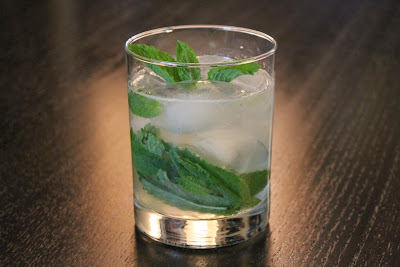
The Spring in a Glass cocktail was marked by herbal freshness appropriate to the season.

'Tis the Season

In the winter, I turned to dark spirits like whiskey and bold flavors from Italian amari, nut liqueurs and grapefruit. The Rye in January is an elegant rye drink with the herbal-cinnamon Czech liqueur Becherovka, grapefruit and Italian Cynar. Enchanted by the idea of a winter forest, The Woodsman combines smoked whiskey with walnut liqueur, sweet vermouth and a homemade rosemary-brown sugar syrup. I featured a pair of classic Drambuie cocktails perfect for winter: a '70s-era Prince Edward and locally sourced Tabard cocktail (named after D.C.'s Tabard Inn). For a guilty indulgence, I made The Siberian, a vodka and Kahlua milkshake.

As the weather warms in spring, I was inspired by brighter flavors like herbs and citrus, even vegetables. Spring in Glass combined mint, cucumber and fennel, the latter coming from D.C.-based Don Ciccio & Figli's Finocchietto, a fennel liqueur.  For Cinco de Mayo, I came up with the Margarita on Fire, a spicy/smoky concoction of mezcal, tequila and habanero shrub.

I kicked off summer with a whole week of cocktails. It included the Teagroni, a tea-based Negroni from Kevin Liu's Craft Cocktails at Home; a Summer Cosmopolitan with gin and fresh ingredients; and two smoky Mezcal cocktails that originated in New York's Mayahuel Mexican cocktail lounge. An experiment with cocktail foams resulted in the herbal Garden Martini. The flavors of Thai cooking were the inspiration for the Bangkok Breeze, featuring basil, rum, ginger and coconut. For my friends' wedding, I created a refreshing summer punch, The Lady Lawyer, with gin, mint and lemon.

Fall finds drinks inspired by the harvest as well as the coming chill of winter. Roasted tomato simple syrup was the key ingredient in my Smokin' Hot Tomato, featuring mezcal, Grand Marnier and habanero shrub, and Tomato at Night, which included (legal) moonshine, Aperol and lemon. For Thanksgiving, I came up with the (Wild) Turkey and Cranberry, a potent and festive (aren't they the same, when you're talking cocktails?) mix of whiskey, Aperol and cranberry bitters. A trio of cocktails made good use of apple brandy, including Jeffrey Morgenthaler's Norwegian Wood and Washington Post cocktails columnist Carrie Allan's modernized Scotchem.

Heisenberg Breaking Bad Cocktail
The Heisenberg, honoring the series finale of Breaking Bad

The Show Must Go On

Entertainment continued to be a rich source of inspiration for original drinks. Following last year's ever-popular Happy Endings-themed Whore's Bath, I created another cocktail for a departing show: The Heisenberg, consisting of whiskey, Becherovka, maple, lime and habanero. Dallas Decoder and I teamed up for another series of Dallas-themed drinks, including The Drew, a sophisticated mix of mezcal, Grand Marnier, Cynar, habanero and flamed orange peel, and The Judith, a rightfully bitter mix of gin, Chartreuse, grapefruit shrub and angostura bitters.

The cocktail highlight of the year were my Oscar cocktails: a series of 10 drinks honoring the year's 9 Best Picture nominees plus a bonus drink for Skyfall, a twist on the classic James Bond martini that nods to elements of the film. My favorite were the Life of Pi, which illustrates beautifully the bold visual style of the film, the Django Unchained, a fiery, irreverent take on Mint Julep, and The Argo, which represented the Best Picture winner with Canadian whiskey and Middle Eastern-inspired spiced syrup.
The Last Word cocktail
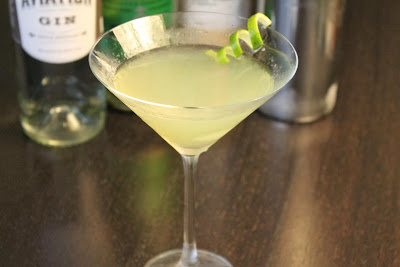
The Last Word: a classic prohibition cocktail revived by a Seattle bartender.

Classics 101

Early in the year, D.C. bartender Derek Brown wrote a piece for Table Matters arguing for bartenders to spend more time with classic drinks. "For every cocktail you create, try learning nine classic cocktails first," he said. Although I didn't quite achieve that balance, I did make an effort to learn classic drinks, including their history.

Take the Last Word, a gin and chartreuse cocktail from the prohibition era that made a comeback recently due to Seattle bartender Murray Stenson. Former Washington Post spirits columnist Jason Wilson honored D.C.'s signature cocktail, the Rickey, with his Nice Rickey. The Singapore Sling, an oft maligned cocktail, is actually rather good when made with quality, fresh ingredients. I also had fun making The Vesper, the classic James Bond vodka and gin martini.

A few other classics everyone should try: Mojito, Mint Julep and Gin & Tonic, the latter of which gave me a chance to taste a number of American small-batch gins (plus drink a lot of G&Ts, my favorite cocktail).

Thursday, December 20, 2012

Cocktail: The Ginger Ken Ten


Here's a cocktail revisiting ingredients from some recent drinks: the Corsair Triple Smoke Whiskey, which I used in The Backyard, and the Italian spirit Cynar, which appeared in Old Tom's New Twist. This drink showcases the whiskey and ginger well, so I named it "Ginger Ken Ten," since Corsair's distilleries are in Kentucky and Tennessee.

The Ginger Ken Ten

1 1/2 oz. smoked whiskey (Corsair Triple Smoke Whiskey)
1/2 oz. Cynar
1/2 oz. fresh lemon juice (juice from 1/2 a lemon)
2 dashes Angostura bitters
3 oz. ginger beer
Lemon twist (garnish)

Combine whiskey, Cynar, lemon juice and Angostura bitters in a cocktail shaker with ice. Shake until cold. Pour into rocks glass with ice. Add ginger beer and stir to combine. Top with lemon twist.

Saturday, February 23, 2013

Oscar Cocktails: Just the Recipes


In one place for easy referencing, here are just the recipes for all 10 Oscar Cocktails. 

Oscar Cocktails: The Amour


1 oz. gin
1/2 oz. pear liqueur
1/2 oz. lemon juice
2 oz. champagne (or other sparkling wine)
Lemon twist (optional garnish)

Combine gin, pear liqueur and lemon juice in a cocktail shaker with ice. Shake until cold. Strain into champagne flute. Top with champagne and garnish with lemon twist.

Oscar Cocktails: The Argo


1 1/2 oz. Canadian whisky
1/2 oz. sweet vermouth
1 oz. orange juice
3/4 oz. cardamom syrup (see recipe)
Orange peel

Combine whiskey, sweet vermouth, orange juice and cardamom syrup in a shaker with ice. Shake until very cold and strain into rocks glass with ice. Garnish with orange peel.

Oscar Cocktails: The Beasts of the Southern Wild


1 ½ oz. rye whiskey
½ oz. walnut liqueur
1 oz. roasted corn syrup (see recipe)
1 oz. milk
Milk foam (see recipe, may substitute whipped cream)
Ground nutmeg (garnish)

Combine whiskey, walnut liqueur, roasted corn syrup and milk in shaker with ice. Shake until cold and strain into a chilled coupe. Top with a generous portion of milk foam and a sprinkle of nutmeg.

Oscar Cocktails: The Django Unchained


8 mint leaves
1 oz. peppercorn syrup (see recipe)
2 oz. bourbon
2 oz. club soda
Mint sprig (optional garnish)

Add mint leaves and peppercorn syrup to highball glass and muddle. Fill glass with ice then add bourbon and club soda. Stir to mix with muddled syrup. Garnish with mint sprig.

Oscar Cocktails: The Les Misérables


2 oz. London dry gin (Plymouth)
1/2 oz. Lillet Blanc
1/2 oz. St. Germain liqueur
1/2 oz. ginger liqueur (Domaine de Canton)
Lemon twist

Combine liquid ingredients in a shaker with ice. Shake until cold and strain into a chilled martini glass. Garnish with lemon twist.

Oscar Cocktails: The Life of Pi


Fine sea salt or kosher salt
1.5 oz. light rum
.64 oz. blue curaçao
.5 oz. simple syrup
.5 oz. lime juice (plus more for the glass rim)
Orange twist

Wet the rim of a chilled coupe with lime juice. Spread salt on a plate and twist the glass rim-down in the salt to coat the rim. Combine rum, blue curaçao and lime juice in shaker with ice. Shake until cold. Strain into salt-rimmed coupe. Garnish with orange twist.

Oscar Cocktails: The Lincoln


2 oz. smoked whiskey (Corsair)
1/2 oz. maple syrup
6 dashes Peychaud's bitters

Combine ingredients in a shaker with ice. Shake until cold and strain into chilled coupe.

Oscar Cocktails: The Silver Linings Playbook


1 1/2 oz. silver tequila (Sauza Silver)
1/2 oz. absinthe (Absente)
1 oz. fresh lime juice
2 dashes angostura bitters
2 oz. ginger beer (Gosling's)
Lime wheel (garnish)

Combine tequila, absinthe, lime juice and bitters in a shaker with ice. Shake until very cold. Strain into a rocks glass with ice. Add ginger beer and stir. Garnish with lime wheel.

Oscar Cocktails: The Zero Dark Thirty


1/2 oz. coffee liqueur (such as Kahlúa)
3/4 oz. Green Chartreuse
1/2 oz. vodka

In a tall shot glass, carefully layer the drink by slowly pour the liquors over the back handle of a spoon touching the inside of the glass just above the previous layer: first the coffee liqueur, then the Chartreuse and finally the vodka.

Oscar Cocktails Bonus: The Skyfall

2 oz. single malt scotch
1/2 oz. Lillet Blanc
1/2 oz. Domaine de Canton ginger liqueur
Lemon twist

Combine scotch, Lillet and ginger liqueur in a shaker with ice. Shake until very cold. Strain into a martini glass and garnish with a lemon twist.


Which Oscar Cocktail do you think sounds most appealing? Vote on Facebook.

Friday, October 25, 2013

The Holzfäller (Woodsman) Cocktail

The Holzfäller (Woodsman) Cocktail

I named this cocktail The Holzfäller, which is German for "woodsman" for a few reasons. Principally, it was inspired by my recent dinner at Portland's Alpine-themed restaurant Gruner. Two of its ingredients come from the Alpine region: Austrian Nux Alpina walnut liqueur and French Dolin Rouge sweet vermouth. Additionally, the smoked whiskey and homemade rosemary-brown sugar syrup are woodsy flavors in my mind. This cocktail is pretty potent, but sweet enough that it makes for mellow sipping.

The Holzfäller (Woodsman) Cocktail

1 1/2 oz. Corsair triple smoke whiskey
1/2 oz. Nux Alpina walnut liqueur
1/2 oz. Dolin Rouge sweet vermouth
1/2 oz. rosemary-brown sugar syrup (see recipe below)

Fill a cocktail shaker halfway with crushed ice. Add whiskey, walnut liqueur, sweet vermouth and syrup. Shake until cold and strain into a chilled coupe.

Rosemary-Brown Sugar Syrup

Rosemary-Brown Sugar Syrup

3/4 cup light brown sugar
3/4 cup water
2-3 tablespoons chopped fresh rosemary, plus stems

Combine ingredients in a medium saucepan, including the rosemary stems. Bring to a boil, stirring until the sugar has dissolved. Reduce heat to low and simmer for 5 minutes, then remove from heat and steep for 15-20 minutes. Allow to cool and strain into a container for storage in the refrigerator.

Wednesday, February 5, 2014

The Feed: February 5, 2014

Table, seasoned, kosher, smoked, grey, truffle and rock are among the types of salt that have their place in the home kitchen.
The Feed is my weekly round up of interesting food-related stories from newspapers, magazines, blogs and websites.

Washington Post, “‘Salt to taste,’ taken with a grain of regret,” by Bonnie S. Benwick.
“Salt, to taste” is an instruction that appears in almost every recipe on my site. I rarely specify the amount of salt in a recipe because 1) I don’t really measure it and 2) it’s a subjective matter of taste how salty many dishes should be. Benwick gives the subject a thorough examination in the centerpiece of several articles in today’s Food section in cooking with salt, the most common and popular seasoning and the only thing we eat in significant quantity that is technically a rock. Her article looks at proper seasoning of food with salt in home cooking, a subject on which there is general agreement that few home cooks do it properly, but some disagreement over how to correct that situation. A sidebar shares the Food section’s thoughts on proper salting. Jim Shahin also contributes a story on cooking with smoked salt, an ingredient useful for bringing outdoor flavors inside during cold winters. His Asian-Style Alder-Wood-Smoked-Salt Salmon sounds fantastic.

Washington Post: “Raw eggs in cocktails: Worth the whisk?,” by M. Carrie Allan.
I’ll admit it: raw eggs make me squeamish. I won’t even sample raw cake batter (well, okay, I do sample it sometimes). I know the chance of getting salmonella is small, and I’m not in a high-risk group, but still. However, raw egg adds a specific texture to certain drinks that can’t otherwise be replicated, which is the subject of Allan’s latest Spirits column. Even pasteurized eggs don’t really work as Allan found out when she tried to make a flip with them and was disappointed with the results.

Epicurious: “American Hustle, 12 Years a Slave, Her, and More 2014 Oscar Nominees Celebrated in Food,” by Lauren Salkeld. 
Last year, I created original cocktails for all of the Oscar Best Picture nominees—which I’ll be doing again this year, by the way, starting next week. Others have done this too, as well as dishes inspired by the film. But Salkeld takes it a step further, assembling whole menus for each film using existing Epicurious recipes. Her menus are quite clever, nodding to little details in each film. They also sound really good, particularly the Southern leanings of 12 Years a Slave (Braised Pork Hash) and African stylings of Captain Phillips (Samosas and Doro Wett Chicken Stew).

Serious Eats: “Back of the House: What Does a Food Stylist Do?,” by Jaya Saxena.
Serious Eats debuted its Back of the House column last week, a new feature chronicling interesting careers in the food industry. First up, Saxena profiles food stylist Lisa Homa with an interesting discussion of how food styling has evolved in recent years and even a brief mention of its (sometimes questionable) ethics.

Wall Street Journal: “Mocktails Come of Age,” by Elizabeth Gunnison Dunn.
I love cocktails, but for various temporary or permanent reasons, some folks don’t drink and that’s okay. They deserve better than a soda though, which is why the ability to make a good mocktail is important. I did a decent mocktail version of a cosmopolitan last summer, although I really like that the recipes that accompany this story are original drinks and not just virgin versions of popular cocktails.

The Little Ferraro Kitchen: “Vegetarian Pasta Fagioli,” by Samantha Ferraro.
Last year, I made a wonderful Pasta e Fagioli soup using a Marcella Hazan recipe. As delicious as it was, since it contains pork, it’s not for vegetarians, despite its namesake focus on pasta and beans. Then just last week I had a wonderful vegetarian Pasta Fagioli soup from Oliverio’s in Bridgeport, West Virginia. So I was pleased to come across Samantha’s vegetarian recipe from her site The Little Ferraro Kitchen. Love that she uses parmesan rinds in the broth, which is such a great idea.

NPR: “Grade Inflation In The Maple Syrup Aisle: Now Everything Is An 'A',” by April Fulton.
Ivy League schools aren’t the only ones suffering from grade inflation these days, now all maple syrup will get an “A” thanks to a change in the syrup classification system. Fulton writes about how this is really an effort to correct the public’s misconception that Grade A syrup was “better” than Grade B when the grades were really used to signify different characteristics and not quality.

NPR: “Meet The Cronut's Humble Offspring: The Doughscuit!,” by Ian Chillag.
Had enough of the cronut? Here’s the next hybrid doughnut dessert, doughnut crossed with a biscuit.

CNN: “The only sausage guide you will ever need,” by America’s Test Kitchen.
A visual guide to sausage is just what the world needed. Seriously! This is great primer on the popular spicy encased meats.

New York Times: “There’s a Reason That Rye Is Having a Moment,” by Rosie Schaap.
Bourbon, Scotch and Irish whiskey are playing second fiddle to rye whiskey these days. Schaap tells us why

Quartz: “The world according to hard alcohol,” by Roberto A. Ferdman and Ritchie King.
Ferdman and King have assembled a fun infographic showing which of the most common spirits are most popular around the world country-by-country. Vodka and whiskey appear to be the most dominant, and I was surprised that vodka is more popular than gin in Britain.

Thursday, November 20, 2014

Thanksgiving Cocktails

Smoky Vanilla Bowery cocktail
The last hour or so of cooking Thanksgiving dinner can be a little frantic. It's also when the guests generally arrive. As happy as you may be to see them, it's probably a good idea to keep them out from under foot while you finish reheating stuffing, mashing potatoes, whisking the gravy, etc. But shooing them out of the kitchen is no fun--use the carrot approach instead: entice them into the living room with a cocktail.

The cocktails below are easy to make and can be mixed in advance (if doing so, strain, then store in the fridge; don't store with the ice, since it will dilute the drink too much). The first two are markedly stronger than the second two, since they aren't cut with nonalcoholic mixers (soda and ginger beer). All of the drinks are inspired by flavors of fall and Thanksgiving: smoke, vanilla, sage, apples, ginger, etc.

Smoky Vanilla Bowery (pictured at top)

This isn't really an Old-Fashioned or a Negroni, but the idea of whiskey with Aperol, sugar, bitters and an orange peel is a sort of intersection between those drinks. Then it's got a little vanilla and smoky Laphroaig Scotch as seasonal notes. I called it a "Bowery" because New York's Bowery Street runs through Little Italy (a nod to the Aperol) and the East Village (a part of town with a high concentration of great cocktail bars).

2 oz. rye whiskey
1/2 oz. Aperol
1/2 oz. vanilla syrup (see note below)
2 dashes Fee Brothers whiskey-barrel-aged bitters
1/4 oz. Laphroaig Scotch
Orange peel

Combine whiskey, Aperol, vanilla syrup and bitters in a cocktail mixing glass. Add ice and stir until cold. Strain into a rocks glass with a single large ice cube. Pour the Scotch on top. Squeeze the peel over the drink to express its oils, then drop into the glass.

Note: To make vanilla syrup, split a vanilla bean in half lengthwise. Scrape the seeds into a saucepan and drop the split pod into the saucepan too. Add 1 cup water and 1 cup sugar bring to a boil. Reduce heat to low and simmer for 4 minutes. Allow to cool, strain out the vanilla pod and seeds (or leave in to infuse more flavor) and store in a container in the refrigerator.


Medicine Man

Sage is my favorite herb to use in Thanksgiving dishes. It goes nicely with squash and is essential to many stuffing recipes. And maple is such a nice cold-weather flavor. I made a few changes from the original recipe: I substituted an aged rum for the white rum and also muddled the sage leaves, since this helps release their flavor. Adapted from a recipe by by Ian Scalzo, Bourbon and Branch, San Francisco.

3/4 oz. fresh lemon juice (1/2 of a lemon)
4 sage leaves, divided
2 oz. Mount Gay Extra Old Rum (or other aged rum)
1/2 oz. real maple syrup
1/4 tsp. smoked paprika

Combine lemon juice and 3 sage leaves in a cocktail shaker and muddle the leaves. Add the remaining ingredients, then fill with ice. Shake until cold. Strain into a chilled coupe and garnish with the remaining sage leaf.


Ginger Loves Apples and Whiskey

Apples go nicely with ginger. This recipe calls for Applejack, Laird's blend of apple brandy and other spirits. In contrast, the Apple Turnover cocktail below uses Laird's apple brandy, which is 100% brandy and a little higher proof.

1 1/2 oz. bourbon
1 oz. Laird's Applejack
1/2 oz. fresh lemon juice
1/2 oz. simple syrup
2 dashes Angostura bitters
3 oz. ginger beer
Lemon wheel garnish

Combine bourbon, Applejack, lemon juice, simple syrup and Angostura bitters in a cocktail shaker with ice. Shake until cold, then strain into a rocks glass with ice. Top with ginger beer and garnish with lemon wheel.


Apple Turnover Cocktail

Apple, lemon and honey are also good fall combination, which, along with cardamom, are the key flavors here. I adapted this from the Union Square Cafe recipe for the Apple Crisp Cocktail, making enough changes that I thought a slight name change was warranted. I upped the bourbon from the original recipe and instead of infusing the bourbon with cardamom pods, I went the simpler route of using cardamom bitters. I also opted to serve it in a lowball (i.e. rocks glass) instead of a highball.

1 oz. bourbon
1 oz. Laird's Apple Brandy
3/4 oz. fresh lemon juice
3/4 oz. honey syrup (1/2 honey and 1/2 hot water, stirred together until the honey and water are mixed)
2 dashes cardamom bitters
Club soda
Lemon twist garnish

Combine bourbon, brandy, lemon juice and honey syrup in a cocktail shaker. Add ice and shake until cold. Strain into a lowball glass filled with ice. Top with club soda and garnish with a lemon twist.

Other Recipes

Thanksgiving Central (all Thanksgiving recipes)

(Wild) Turkey with Cranberry cocktail

Hot Butternut Rum

Gingered Apple Sparkler

Dallas Drinks: Cynthia Cider (Applejack, bourbon, Cointreau, lemon, agave, ginger)

Dallas Drinks: The Bobby (apple pie-inspired dessert cocktail)

Wednesday, September 25, 2013

The Feed: September 25, 2013

The Feed is my weekly round up of interesting food-related stories from newspapers, magazines, blogs and websites.

Bon Appétit: “The Whiskey of 'Breaking Bad,' from Knob Creek to Dimple Pinch,” by Jordana Rothman.
This Sunday, Breaking Bad, one of my favorite television shows will conclude its 6-year run. Definitely a moment that deserves a stiff drink, especially given the very dark (very very dark) way the show is wrapping up. Rothman examines how whiskey turns up frequently in the show, generally during pivotal moments. In contrast, tequila, when it appears, usually spells doom. Great stuff for very observant boozehound viewers of AMC’s amazing series.

Details: “Fall Whiskey Trend Alert: Maple Is the New Honey,” by Camper English.
English, writer of Alcademics.com, talks about this year’s whiskey flavor trend: maple. I have to say, I’m generally not a fan of flavored liquors. I’d rather mix the flavors myself with liqueurs, syrups and infusions. But I just might be tempted to try Knob Creek’s Smoked Maple whiskey. Sounds like a great way to warm up on a cold winter day.

DC Eater: “Seasonal Sips: Bartenders' Fave Fall Ingredients.”
Time to put away the tomato water and break out the baking spices, apple brandy, sweet vermouth and pumpkin—just a few of the flavors D.C. bartenders are using in their new fall-themed drinks.

Washington Post: “Why farmed salmon is becoming a viable alternative to wild-caught,” by Tamar Haspel.
When it comes to buying salmon, I know that wild is supposed to be “better,” but in DC, it tends to be way more expensive. And frankly, it’s not necessarily better tasting. I’ve been content to enjoy the farmed variety from Whole Foods for many years. It’s nice to see that “farmed” isn’t such a bad word anymore in the salmon world, as awareness of bad practices has led to improvements to address many of them. Haspel, who wrote the pig-raising series for the Post last year that I found so compelling, does a typically great job of exploring the issue. There’s also a related tasting story where, surprise, testers found they preferred the taste of farmed salmon too.

Wall Street Journal: “How to Make Beurre Composé,” by Gail Monaghan.
You might not think a story about flavoring butter would be very interesting, but I found Monaghan’s story about “buerre composé” (a.k.a. “compound butter”) to be a great look at how mix-ins like herbs, garlic and anchovies can elevate creamy, luscious butter to an even higher plane.

Wall Street Journal: “Vanilla Beans That Are Anything but Plain Vanilla,” by Elizabeth Gunnison Dunn.
“Vanilla” is metaphorically synonymous with “plain” and “boring,” which is a real shame, since, as cooks know, vanilla is anything but. In its original bean form, it exhibits complex even overpowering flavor. While ideal for desserts, vanilla has some savory applications too, which Dunn explores courtesy of advice from Empellon Chef Alex Stupak. I really appreciated the sidebar explanation of the different flavors of various types of vanilla bean.

New York Times: “Panzanella With Chicken and Capers,” by Melissa Clark.
While tomatoes are in season, we eat a ridiculous amount of panzanella. In fact, we have it almost every Sunday night from late July through late September. It’s just so good right now. I have a standard recipe, although sometimes I mix it up a bit (like this roasted tomato version). Although I usually make mine vegetarian, I enjoyed this take by Clark that includes roasted chicken, crispy chicken skin and capers.

New York Times: “Breaded and Fried Cutlets Can’t Miss,” by David Tanis.
Breaded, fried meat cutlets are an easy and satisfying preparation. Tanis talks about why and offers tips for doing it well.

The Boys Club: “Liquor Pronunciation Guide,” by Greg Mays.
Don’t you just hate it when you want to order something off the menu but you’re not sure how to pronounce it? It makes you feel like such a rube. Same is true at the bar or the liquor store. Wouldn’t you rather been the person looking to buy Cynar that asks for “CHEE-nar” instead of “SIE-nar”? This guide will help you sound sophisticated next time you’re in the market for Dambule (dram-BEU-ie) or Angostura (AN-go-STOOR-a). You’re on your own though if you want Curaçao, although I’m pretty sure you shouldn’t sound like you’re a bovine doctor.

Saturday, February 9, 2013

Oscar Cocktails: The Lincoln


Steven Spielberg’s Lincoln is a historical biopic that seeks to illuminate its subject not by telling his life story but by focusing on one important event. In this case, that is President Abraham Lincoln’s advocacy of the 13th amendment to the Constitution to outlaw slavery as the Civil War draws to a close. Lincoln is the year’s most nominated film: 12 Oscar nods, including Picture, Actor (Daniel Day-Lewis), Supporting Actress (Sally Field) and Director.

I wanted the Lincoln cocktail to be simple and elegant, as well as symbolic of the war. There’s whiskey to represent the South and maple for the North, while the smoke evokes the guns of battle and the red bitters, the blood of the battlefield.

Oscar Cocktails: The Lincoln

2 oz. smoked whiskey (Corsair)
1/2 oz. maple syrup
6 dashes Peychaud's bitters

Combine ingredients in a shaker with ice. Shake until cold and strain into chilled coupe.

Like The Lincoln? Vote for it as your favorite on Facebook. View all nine Oscar Cocktails here.

Friday, January 25, 2013

A Walk in the Woods


Have you ever walked in the woods in the winter time? Smelled the cold scent of fir trees mingled with the smoke from a nearby cabin? This drink is an attempt to capture that moment as a cocktail.

A Walk in the Woods

1 1/2 oz. smoked whiskey (Corsair triple smoke whiskey)
1/4 oz. walnut liqueur
3/4 oz. rosemary-juniper syrup (see recipe below)
1 oz. grapefruit juice
2 dashes angostura bitters
Club soda

Combine and ingredients in a shaker with ice and shake until cold. Strain into a rocks glass with ice. Top with club soda.


Rosemary-Juniper Syrup

1 tbsp. juniper berries
2 tbsp. roughly chopped fresh rosemary
1 cup water
3/4 cup sugar

Crush juniper berries with a muddler or heavy knife. Add to medium saucepan with rosemary, water and sugar. Heat mixture over medium-high heat until it boils, reduce heat to simmer and cook syrup until it reduces to about 3/4 cup, about 10 minutes. Set aside to steep about 15 minutes then strain out the solids. Allow the syrup to cool.

Wednesday, January 6, 2016

Black Eyed Peas with Bacon and Chard

Black Eyed Peas with Bacon and Chard

Do you believe in luck? Many people don't; I don't really--except that I sort of do. Like a lot of people, I know that many things in life happen by chance. I believe "luck" is when those are things you want to have happen. Like winning a contest, unexpectedly running into an old friend or being the last person to snag something special.

Certainly the number of things we do for luck attests to our belief in it. We kiss the Blarney stone, knock on wood and hunt for four-leaf clovers.

Then there's the practice of eating black eyed peas on New Year's Day. It's a tradition many Southerners observed, which I hadn't heard of until just recently, having read an article about it in the New York Times Food section.

Black Eyed Peas

There are quite a few explanations for the practice, many of which date back to the Civil War and some go back to ancient times.

Although it's not a tradition I'm tied to, I'm certainly not one to turn down a good bowl of pork and beans with greens, which is what I made, inspired by the accompanying recipe by Kim Severson, as well as another Times recipe by David Tanis, I made my own version of the dish. Their dishes call for using dried or fresh peas, as well as ham hocks. They cook for several hours, which I'm sure is delicious, but I wanted a faster recipe--something you could make midweek to enjoy black eyed peas any day of the winter, not just on New Year's Day. So I use canned black eyed peas and bacon, specifically the hickory-smoked bacon from Benton's that I love so much.


Black Eyed Peas with Bacon and Chard
Inspired by recipes by Kim Severson and David Tanis for Black Eyed Peas

1/2 lb. thick-cut hickory-smoked bacon, cut into 1/2 pieces
1 large sweet or yellow onion, diced
4 garlic cloves, minced
1/2 tsp. red chili pepper flakes (use more or less depending on your taste for heat)
1 bunch (about 1 lb.) Swiss or rainbow chard, leaves removed and cut into 1-inch wide strips, stems discarded
Salt and freshly ground black pepper, to taste
15 oz. can black eyed peas, drained and rinsed
4 cups low-sodium chicken stock
1/2 tsp. ground allspice
1 bay leaf

1. Cook the bacon in a Dutch oven or other large soup pot over medium heat. When browned and crisp, remove the bacon with a slotted spoon and transfer to a paper-towel-lined plate. Reserve 2 tbsp. of the hot bacon fat in the pot (use the rest for something else, like thin and crispy cornbread).

2. Add the onion to the pot and cook until softened, about 8 minutes. Ad the garlic and chili pepper flakes and cook another couple minutes until the garlic is fragrant. Add the chard leaves, season with salt and pepper and stir to mix with the other ingredients. Allow the chard to wilt a bit, then add the cooked bacon, black eyed peas, chicken stock, allspice and bay leaf. Increase heat to bring to a boil, then reduce heat to simmer for about 15 minutes.

3. Ladle the soup into shallow bowls and serve with cornbread and an old fashioned (recipe below).

Old Fashioned Cocktail

2 oz. bourbon whiskey
1/4 oz. simple syrup
2 dashes Angostura bitters
Orange peel garnish
Maraschino cherry garnish

Combine whiskey, simple syrup and bitters in a cocktail mixing glass with ice. Stir until very cold, then strain into a rocks glass with a single large ice cube. Squeeze the orange peel over the drink, rub it around the rim of the glass and drop it in. Add the cherry and serve.